
Self-Managed vs Plan-Managed vs NDIA-Managed NDIS: Which Is Right for You
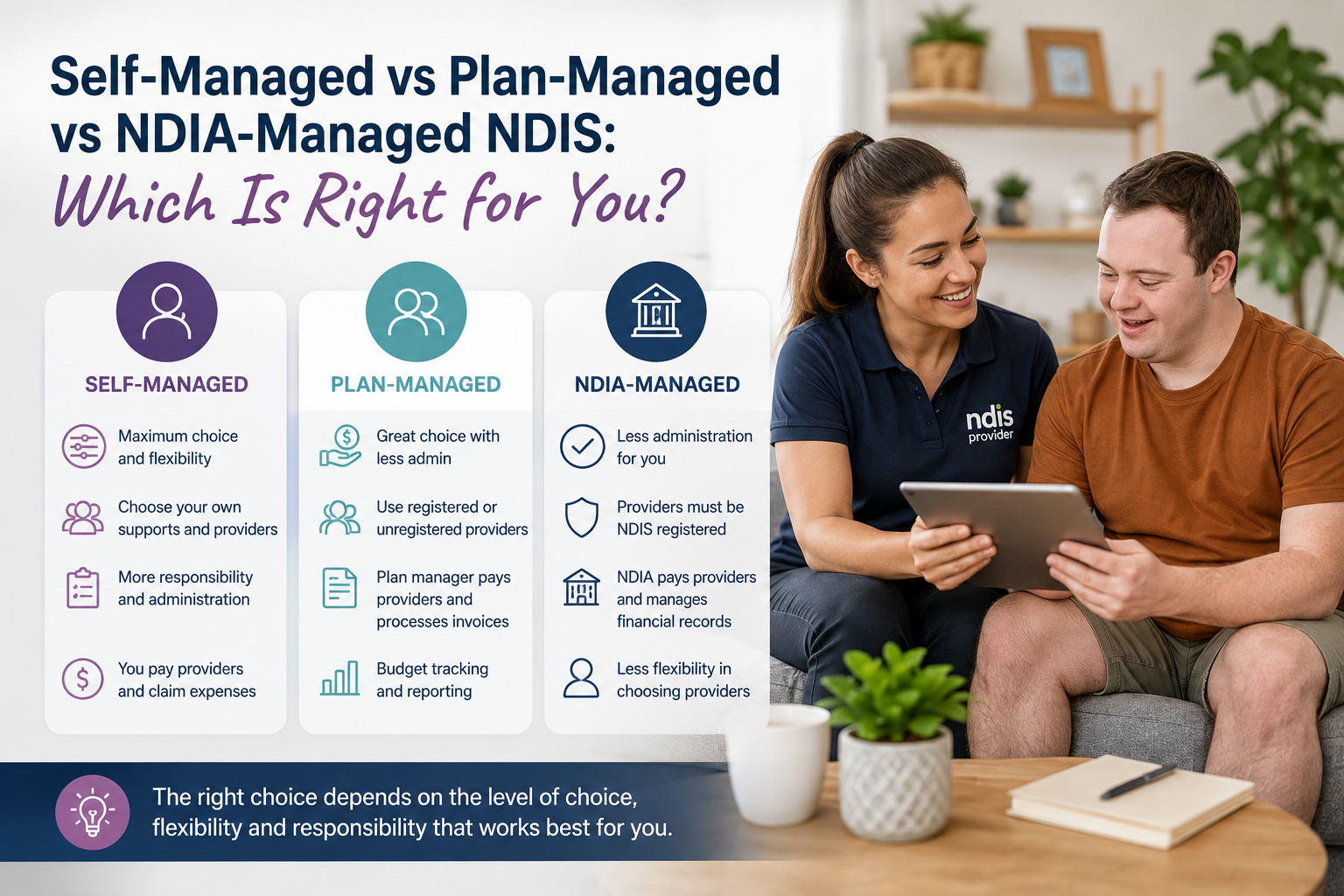
Self-Managed vs Plan-Managed vs NDIA-Managed NDIS: Which Is Right for You?
One of the most important decisions in an NDIS plan is how your funding will be managed.
The NDIS currently offers three main funding management options:
- Self-managed
- Plan-managed
- NDIA-managed, sometimes called Agency-managed
You can also use a combination of these options across different parts of your plan. For example, one support budget may be self-managed while another is NDIA-managed.
The right option depends on how much choice, flexibility and administrative responsibility you want.
At Allegiance Heart & Home Care, we support NDIS participants to access personalised services that help them pursue their goals and maintain independence.
Learn more about Allegiance Heart & Home Care:
https://allegiancehearthomecare.com.au/ndis
What Does NDIS Plan Management Mean?
NDIS plan management refers to who manages the financial side of your NDIS funding.
This includes responsibilities such as:
- Paying providers
- Processing invoices
- Keeping financial records
- Monitoring your spending
- Making sure funding is used for appropriate NDIS supports
No matter which management option you use, your NDIS funding must still be spent on supports that are consistent with your plan and NDIS rules.
Option 1: What Is Self-Managed NDIS Funding?
With self-managed NDIS funding, you, your nominee or your child's representative manages the funding directly.
Self-management generally offers the greatest level of flexibility.
The NDIS states that self-managed participants may have greater choice over:
- What eligible NDIS supports they purchase
- Who provides those supports
- How the supports are delivered
- Using registered or unregistered providers
- Negotiating the cost of supports
- Directly employing or contracting workers where appropriate.
This level of flexibility can be very attractive if you want to be closely involved in your supports.
Benefits of Self-Managing Your NDIS Plan
One of the biggest advantages of self-management is choice and control.
You may have greater freedom to find workers who match your individual needs, preferences and lifestyle.
For example, you may want a support worker who:
- Speaks your preferred language
- Has experience supporting people with similar needs
- Is available at particular times
- Lives locally
- Shares your interests
- Understands your culture
- Is someone you already know and trust
Self-management can also allow you to use eligible unregistered providers, giving you access to a wider range of potential service providers.
What Are the Responsibilities of Self-Managing?
Greater flexibility also comes with greater responsibility.
If you self-manage, you may need to:
- Keep invoices and receipts
- Pay providers
- Make claims
- Monitor your available funding
- Keep appropriate records
- Check that services are eligible NDIS supports
- Manage agreements with your providers
- Organise your own workers and schedules
For some participants and families, this level of involvement is exactly what they want.
For others, the administration can become time-consuming.
Option 2: What Is Plan-Managed NDIS Funding?
Plan-managed funding sits somewhere between self-management and NDIA-management.
With this option, a registered NDIS plan manager handles much of the financial administration for you.
A plan manager can:
- Pay your providers
- Process NDIS claims
- Keep financial records
- Help monitor your budget
- Provide information about your spending
- Help you understand how your funding is being used.
Plan managers must be registered with the NDIS Quality and Safeguards Commission.
Do You Pay for an NDIS Plan Manager From Your Existing Support Budget?
If you have plan-managed support budgets, the NDIS includes separate funding in your plan for your plan manager.
That funding is specifically allocated for plan management and does not simply come out of the amount allocated for your other supports.
This is one reason many participants choose plan management.
They can have someone else handle invoices and financial records while still retaining considerable choice over their service providers.
Can Plan-Managed Participants Use Unregistered Providers?
Yes.
Plan-managed participants can generally choose between registered and unregistered NDIS providers.
The NDIS also states that plan-managed participants can negotiate prices with their providers.
This provides much of the provider flexibility associated with self-management without requiring you to personally handle all the payments and financial records.
What Does a Plan Manager Actually Do?
A plan manager primarily looks after the financial management of your plan.
They can help:
- Pay provider invoices
- Submit claims
- Track your expenditure
- Check claims against your plan
- Help reduce the risk of overspending
- Give you reports showing your remaining funding.
It is important to understand that a plan manager is different from a support coordinator.
A plan manager manages funding and payments, while a support coordinator generally helps participants understand and implement their plan and connect with suitable supports.
Option 3: What Is NDIA-Managed Funding?
With NDIA-managed funding, the NDIA manages payments to your providers and maintains the financial records associated with those services.
After a registered provider delivers an approved NDIS support, they generally claim payment directly through the NDIS system.
For participants, this can mean less financial administration.
However, there is an important difference.
Can NDIA-Managed Participants Use Unregistered Providers?
Generally, no.
If a support budget is NDIA-managed, the providers you use for those supports must generally be registered NDIS providers.
This can mean a smaller provider pool compared with self-managed or plan-managed funding.
You can still choose between suitable registered providers.
Which Option Gives You the Most Choice?
For many participants, self-management provides the greatest flexibility.
The NDIS specifically describes self-management as providing participants with significant choice over what eligible supports they purchase, who delivers them and how they are delivered.
However, greater choice also means more responsibility.
If you want broad provider choice but do not want to process invoices yourself, plan management may provide a useful middle ground.
Which Option Has the Least Administration?
NDIA-management generally requires less financial administration from the participant because the NDIA pays providers and manages the associated financial records.
Plan management also reduces much of the payment and record-keeping burden because a plan manager handles these activities.
Self-management requires the participant or nominee to take on more of these responsibilities.
Can You Combine NDIS Management Options?
Yes.
You do not necessarily have to choose one option for your entire NDIS plan.
Different parts of your plan may be managed in different ways.
For example, you might:
- Self-manage one support category
- Have another category plan-managed
- Have another category NDIA-managed
The NDIS confirms that management options can be combined depending on your circumstances and plan.
This can give participants greater flexibility.
Can You Change How Your NDIS Plan Is Managed?
Yes.
If your current funding management arrangement is no longer working for you, you can ask the NDIA about changing it.
The NDIS advises that participants can request a change to how their plan is managed and do not necessarily need to wait until a new plan is created.
For example, you may decide that:
- Self-management is becoming too time-consuming
- You want greater provider choice
- You would prefer a plan manager to handle invoices
- You feel confident enough to begin self-managing part of your plan
Your circumstances and preferences can change over time.
Is Self-Managed NDIS Right for You?
Self-management may suit you if you:
- Want maximum choice and control
- Want to use registered and unregistered providers
- Want greater flexibility in choosing support workers
- Are comfortable processing invoices and keeping records
- Want to negotiate service costs
- Have a family member or nominee who can assist
- Prefer to manage your own service arrangements
Is Plan-Managed NDIS Right for You?
Plan management may be suitable if you:
- Want broad provider choice
- Want to use registered or unregistered providers
- Do not want to process invoices yourself
- Want assistance tracking your budget
- Want someone to manage financial records
- Still want to choose your own providers
This can provide a balance between choice and administrative support.
Is NDIA-Managed NDIS Right for You?
NDIA-management may suit you if you:
- Prefer less financial administration
- Are comfortable using registered NDIS providers
- Do not want to manage provider payments
- Want the NDIA to maintain your financial records
There is no universally better option.
The best arrangement is the one that matches your goals, confidence and preferred level of involvement.
Choosing the Right NDIS Support Provider
How your funding is managed is only one part of getting the most from your NDIS plan.
You should also choose providers who:
- Listen to you
- Understand your goals
- Communicate clearly
- Offer reliable support
- Respect your choices
- Provide suitable and experienced workers
- Work around your routine where possible
- Support your independence
At Allegiance Heart & Home Care, we understand that participants want more than simply having a worker arrive for a shift.
Good disability support should be built around your goals, preferences, routines and choices.
Looking for an NDIS Support Provider?
If you are looking for reliable NDIS support services, Allegiance Heart & Home Care can discuss your needs and the type of support you are looking for.
Whether your funding is self-managed, plan-managed or NDIA-managed, the important thing is finding supports that are appropriate to your plan and help you work towards your goals.
Learn more:
https://allegiancehearthomecare.com.au/ndis
Find NDIS Support That Works for You
Whether you choose self-management, plan management or NDIA-management, the purpose of your NDIS funding is to help you access suitable supports and pursue your goals.
Understanding how each option works can help you make a more informed decision about how involved you want to be in managing your funding.
If you're looking for a responsive NDIS support provider, visit:
https://allegiancehearthomecare.com.au/ndis
